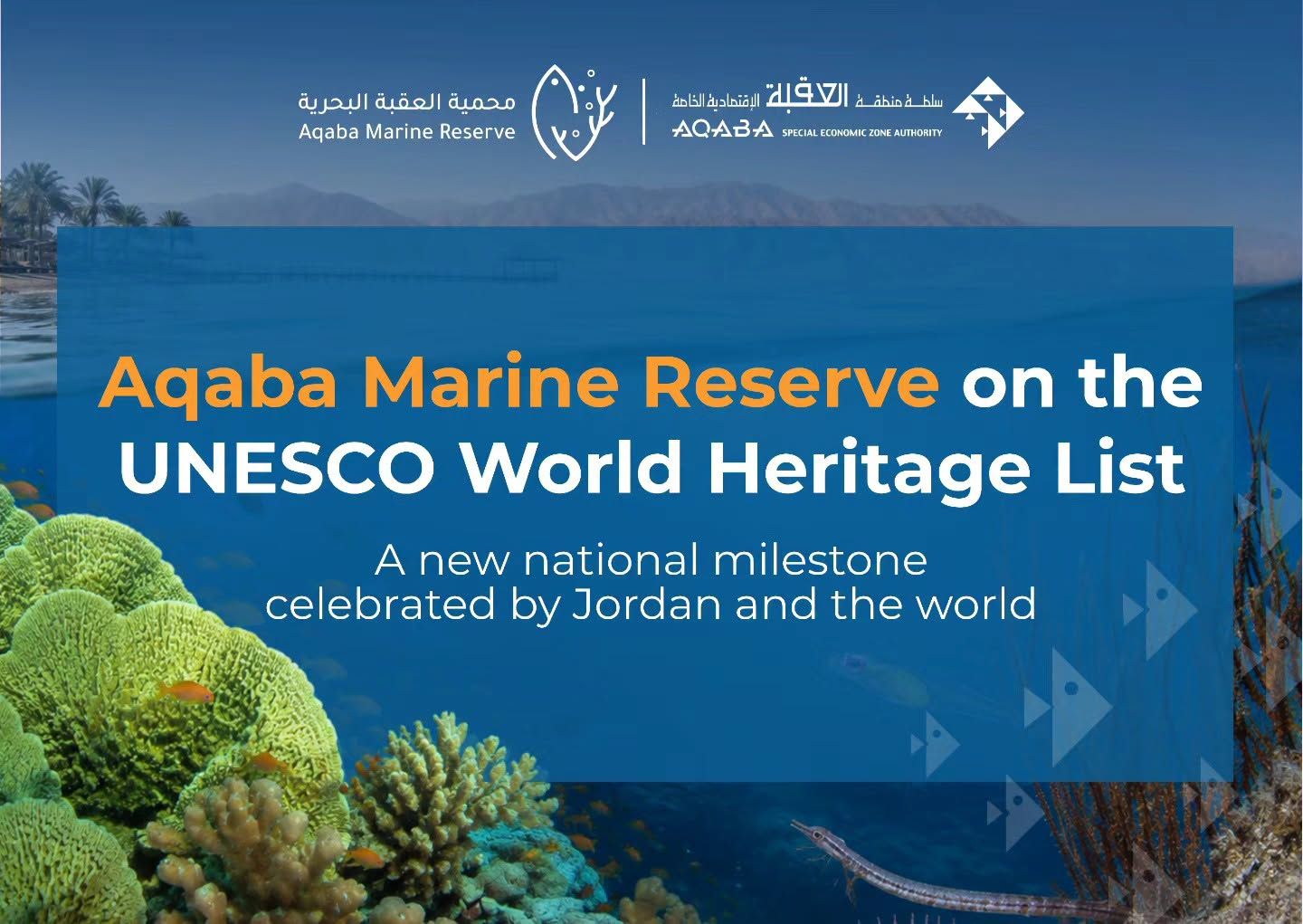
Aqaba Marine Reserve – A GFCR Priority Site – Inscribed on the UNESCO World Heritage List
Jordan celebrates the inscription of the Aqaba Marine Reserve on the UNESCO World Heritage List.
The inscription of Jordan's Aqaba Marine Reserve on the UNESCO World Heritage List marks a historic milestone for marine conservation in Jordan and the wider Red Sea region. The recognition reflects the Outstanding Universal Value of the Reserve and its globally significant coral reef ecosystems, which are renowned for their exceptional biodiversity, remarkable resilience to climate change, and their vital ecological, economic, and cultural importance.
Located at the northern tip of the Gulf of Aqaba, the Aqaba Marine Reserve encompasses a unique mosaic of coral reefs, seagrass meadows, and marine habitats that support hundreds of marine species, many of which are of regional and global conservation importance. The Reserve also plays a critical role in sustaining Jordan's tourism sector, fisheries, scientific research, and coastal livelihoods while serving as one of the country's most valuable natural assets.
The World Heritage inscription is the result of many years of national commitment to marine conservation, supported by strong institutional collaboration, science-based management, and the continuous efforts of the Aqaba Special Economic Zone Authority (ASEZA), national institutions, local stakeholders, and international partners to protect and sustainably manage this unique marine ecosystem.
The Aqaba Marine Reserve is also one of Jordan's priority sites under the Global Fund for Coral Reefs (GFCR) programme, implemented by the United Nations Development Programme (UNDP) in partnership with ASEZA. Through the programme, a range of technical activities has been implemented to strengthen the long-term conservation and sustainable management of the Reserve. These include scientific assessments, capacity-building programmes, technical workshops, stakeholder engagement, and initiatives that support sustainable marine management and reef-positive practices.
Among the programme's key activities are training programmes for marine practitioners and enforcement agencies, coral reef monitoring and scientific assessments, studies on ecosystem services and reef resilience, sustainable tourism initiatives, Green Fins implementation, assessments of dive site carrying capacity, and the promotion of innovation and sustainable Blue Economy solutions that contribute to the protection of Jordan's marine environment.
The inclusion of the Aqaba Marine Reserve on the UNESCO World Heritage List not only celebrates Jordan's rich natural heritage but also reinforces the country's commitment to conserving one of the world's most resilient coral reef ecosystems for future generations. It further highlights the importance of continued collaboration among government institutions, local communities, researchers, development partners, and conservation organizations to ensure that this globally significant marine ecosystem remains protected while supporting sustainable development and the Blue Economy.