Jordanian–Saudi Regional Initiative to Strengthen Sustainable Management of Dive Sites Aqaba
Jordanian–Saudi Regional Initiative to Strengthen Sustainable Management of Dive Sites in Aqaba
Aqaba - Jordan17 Dec 2025
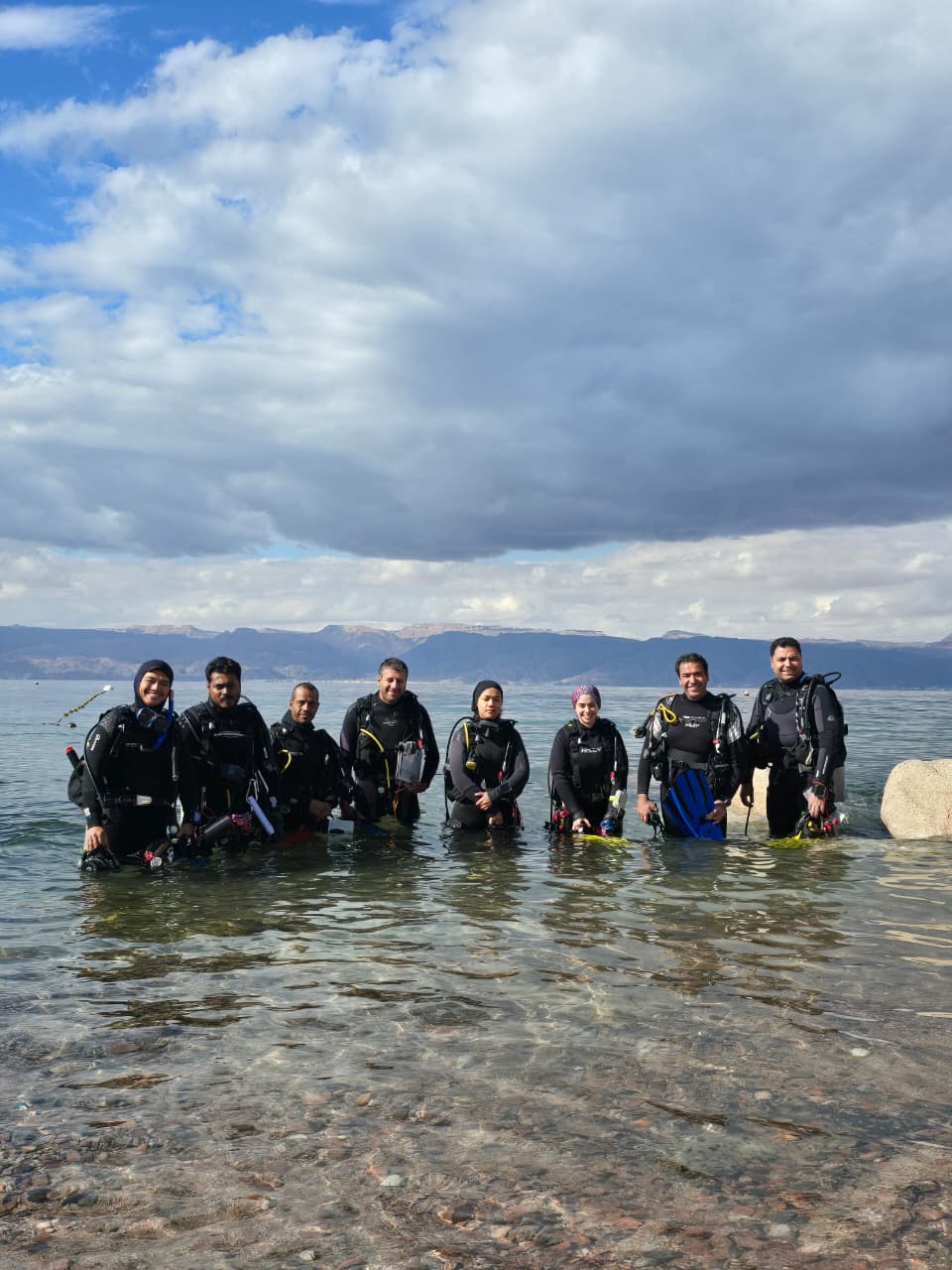
As part of joint efforts to protect coral reefs and enhance the sustainability of diving activities in the Gulf of Aqaba, a regional collaborative initiative was implemented to assess the carrying capacity of dive sites along the Aqaba Marine Reserve between 07 - 16 Dec 2025. The initiative was carried out by a specialized scientific team from the General Organization for the Conservation of Coral Reefs and Sea Turtles in the Red Sea (SHAMS) in the Kingdom of Saudi Arabia, in cooperation with the Aqaba Special Economic Zone Authority (ASEZA) and the United Nations Development Programme (UNDP) in Jordan, under the Gulf of Aqaba Resilient Reefs Programme (GFCR).
The specialized scientific team from SHAMS conducted field assessments and technical studies using internationally recognized scientific methodologies. These assessments evaluated the environmental and physical carrying capacity of 14 dive sites, selected in coordination with ASEZA and the Aqaba Marine Reserve. The work also included analysis of diver-use intensity, assessment of dive-center operational practices, and collection of visitor perceptions, with the aim of identifying sustainable use thresholds and proposing site-specific management measures.
The study included ecological surveys using scientific methods such as timed roving surveys and photo-quadrat assessments at depths of 5, 10, and 20 meters, alongside social surveys through questionnaires targeting divers, visitors, and dive-center operators. Environmental and social indicators were integrated to provide a comprehensive estimation of the carrying capacity for each site.
In parallel, a specialized technical workshop was held with the participation of the diving sector in Aqaba and relevant stakeholders. The workshop aimed to strengthen participants’ capacities to understand, assess, and apply carrying capacity principles in dive-site management, ensuring coral reef protection and the long-term sustainability of diving activities in the Aqaba Marine Reserve, while balancing environmental and economic considerations.
The workshop addressed several key themes, including the concept and importance of carrying capacity and its implications for marine ecosystems; the role of carrying capacity in dive-site management; the impacts of unsustainable diving on coral reef habitats; sustainability and future planning of marine activities; assessment mechanisms and technical criteria used to determine carrying capacity; environmental and technical factors; and human pressures contributing to ecosystem degradation.
This initiative represents a key technical component of the Gulf of Aqaba Resilient Reefs Programme (GFCR), which aims to strengthen the long-term resilience of coral reef ecosystems in the Gulf of Aqaba through science-based management, regional collaboration, and sustainable use of marine resources. By generating robust, site-specific carrying capacity data, the assessment directly supports evidence-based decision-making, improved dive-site management, and the integration of sustainability principles into tourism and blue economy planning.
At the regional level, the initiative demonstrates the value of cross-border scientific cooperation between Jordan and Saudi Arabia, recognizing the ecological connectivity of the Gulf of Aqaba as a shared marine system. This collaborative approach contributes to harmonizing methodologies, sharing expertise, and promoting coordinated management practices across the Gulf, reinforcing the GFCR vision of collective action to safeguard coral reefs as globally significant climate-resilient ecosystems
This initiative forms part of a broader integrated vision to strengthen the sustainable management of the Aqaba Marine Reserve, promote regional cooperation, and apply best scientific practices in dive-site management, contributing to the conservation of the unique marine ecosystems of the Gulf of Aqaba for future generations.