Strengthening Coral Reef Monitoring Capacities in the Gulf of Aqaba
Aqaba Marine Reserve recently hosted a five-day “Coral Reef Monitoring Training” programme
Strengthening Coral Reef Monitoring Capacities in the Gulf of Aqaba
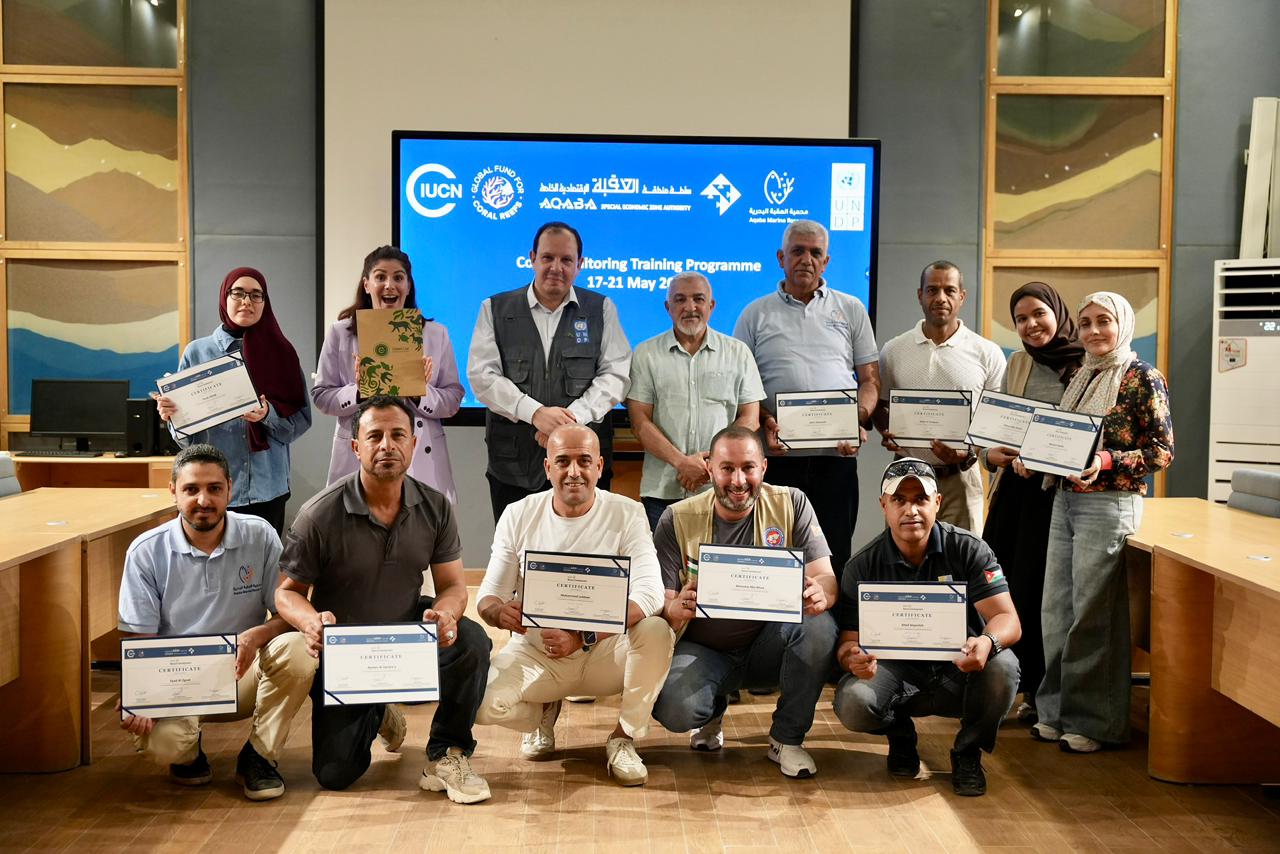
Over the course of five days, from 17 to 21 May 2026, Aqaba hosted a specialized training programme titled “Coral Reef Monitoring Training”, implemented under the agreement signed between the United Nations Development Programme (UNDP Jordan) and the International Union for Conservation of Nature – Regional Office for West Asia (IUCN ROWA) as the implementing partner, through the Global Fund for Coral Reefs (GFCR).
The training programme was hosted by the Aqaba Marine Reserve and brought together marine environmental monitoring staff working within Aqaba’s coral reef monitoring programme, in addition to participants from the Aqaba Marine Reserve, local community representatives, and members of the diving sector.
The training aimed to strengthen technical and scientific capacities in coral reef monitoring, marine ecological data collection, and environmental analysis. The programme included both classroom and field-based practical sessions, including diving activities at multiple marine sites and the collection of data from the marine ecosystem. Participants also received training on benthic habitat classification, marine survey techniques, CoralNet applications, ecological data analysis, and the use of R, QGIS, and NOAA SST tools.
The curriculum was developed in consultation with KAUST Beacon Development following a structured assessment of the existing monitoring programme to identify technical gaps and capacity-building needs, contributing to the advancement of marine environmental monitoring systems in the Gulf of Aqaba in line with modern scientific approaches and technologies.
The programme also included specialized sessions on coral reef restoration, rehabilitation, and coral propagation methodologies, in addition to discussions on major environmental pressures and threats affecting marine ecosystems, including plastic pollution and its impacts on marine habitats and coral reefs. The training further highlighted a number of practices and approaches related to pollution reduction, management, and mitigation within the framework of sustainable marine environmental management.
This training represents an important step toward strengthening marine environmental monitoring capacities and improving the collection and analysis of coral reef and marine ecosystem data in the Gulf of Aqaba, supporting evidence-based decision-making and sustainable marine management efforts. The participation of representatives from the Aqaba Marine Reserve, local communities, and the diving sector also reflects the importance of strengthening partnerships and collaboration among key stakeholders to support coral reef conservation and the sustainability of marine resources in Aqaba.
The training also forms part of the activities implemented under the Gulf of Aqaba Resilient Reefs Programme, which aims to strengthen coral reef and marine ecosystem protection, support the sustainable management of coastal and marine resources, and enhance technical and institutional capacities to improve the resilience of marine ecosystems in the face of environmental pressures and climate change, particularly given the global significance of the Gulf of Aqaba’s coral reefs as one of the world’s most resilient reef systems.